 CHINA 5A TRAVEL
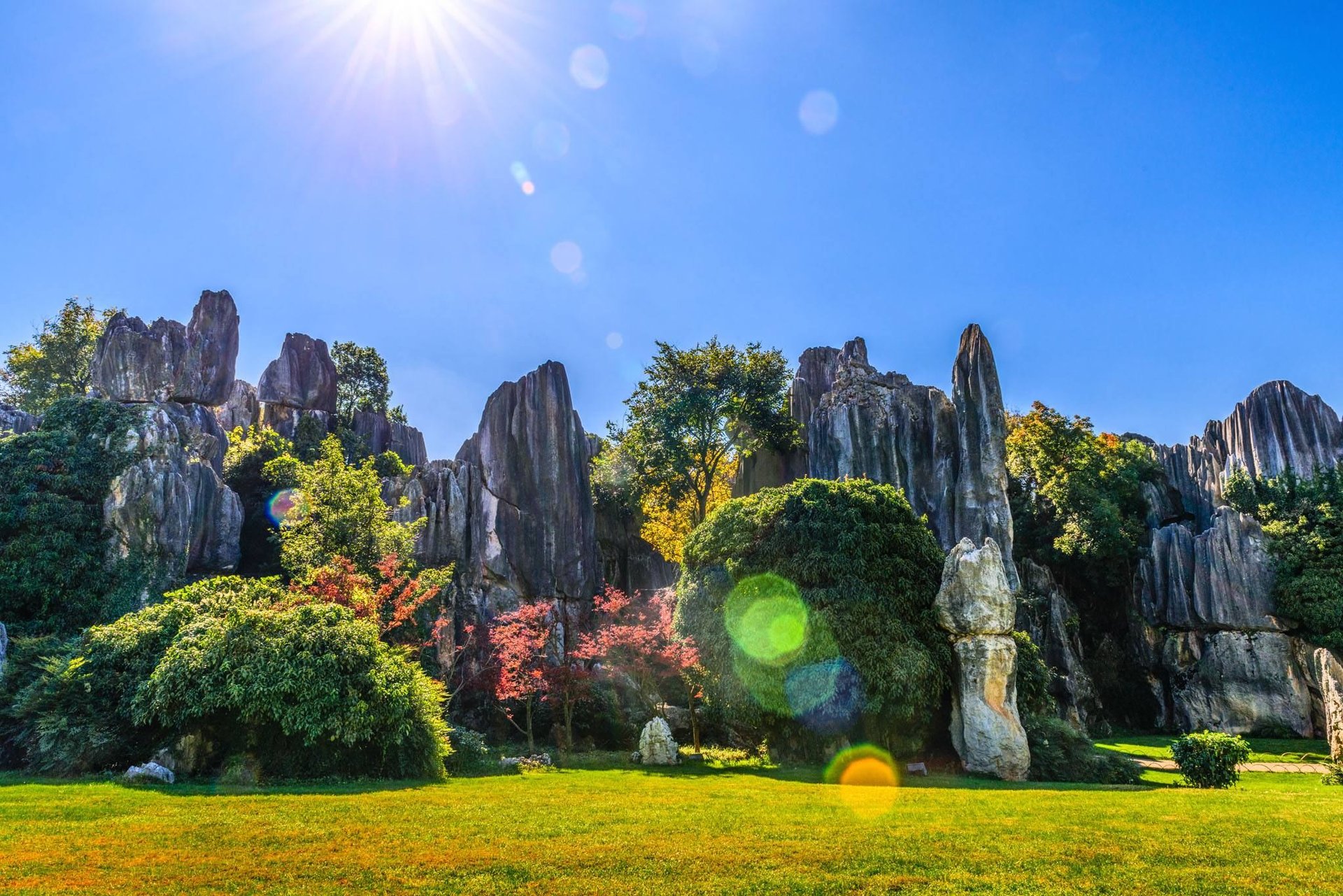
A 270-million-year-old maze of limestone blades near Kunming — UNESCO karst heritage, the legend of stone maiden Ashima, and the 'First Wonder under Heaven'.
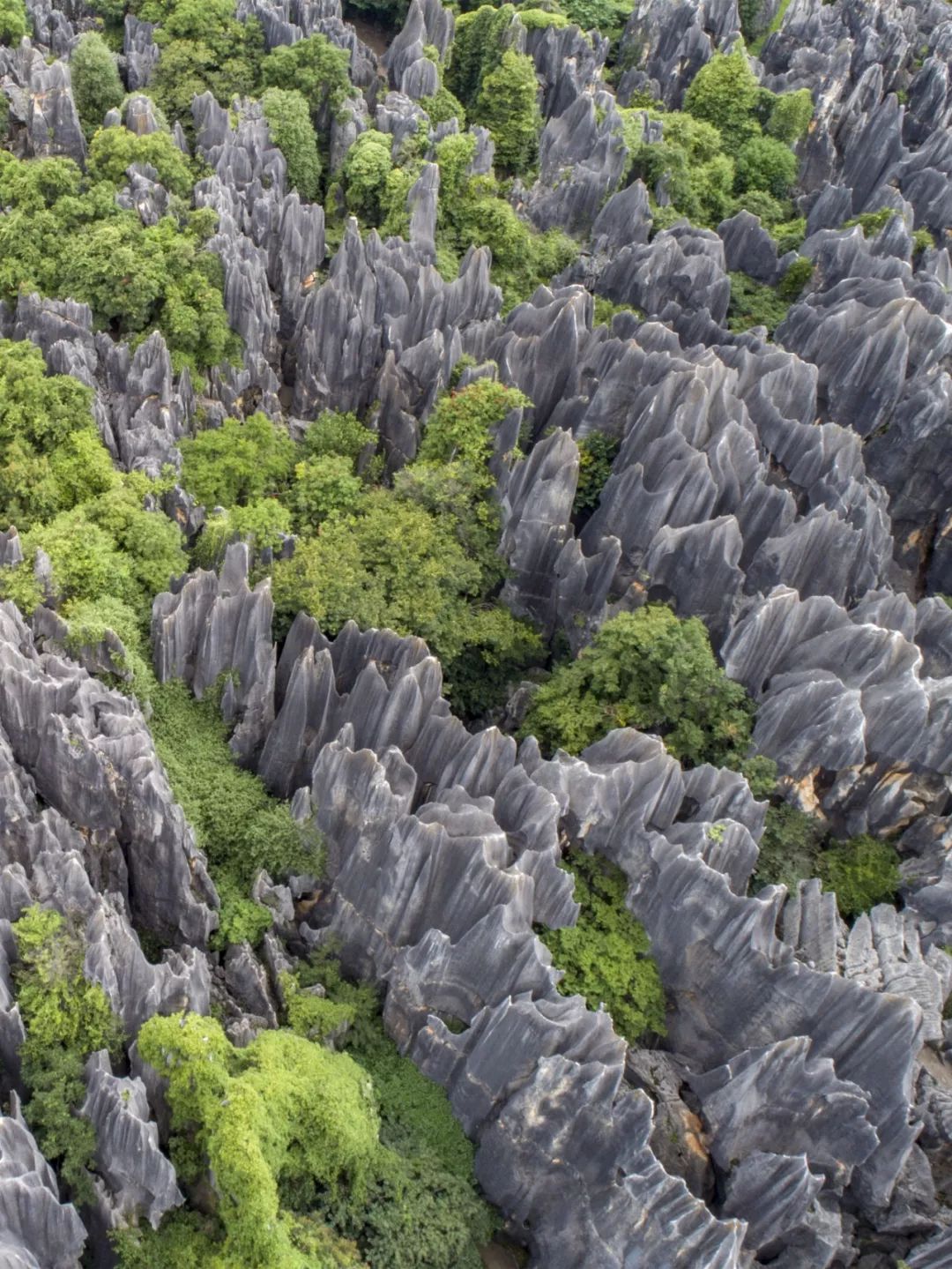
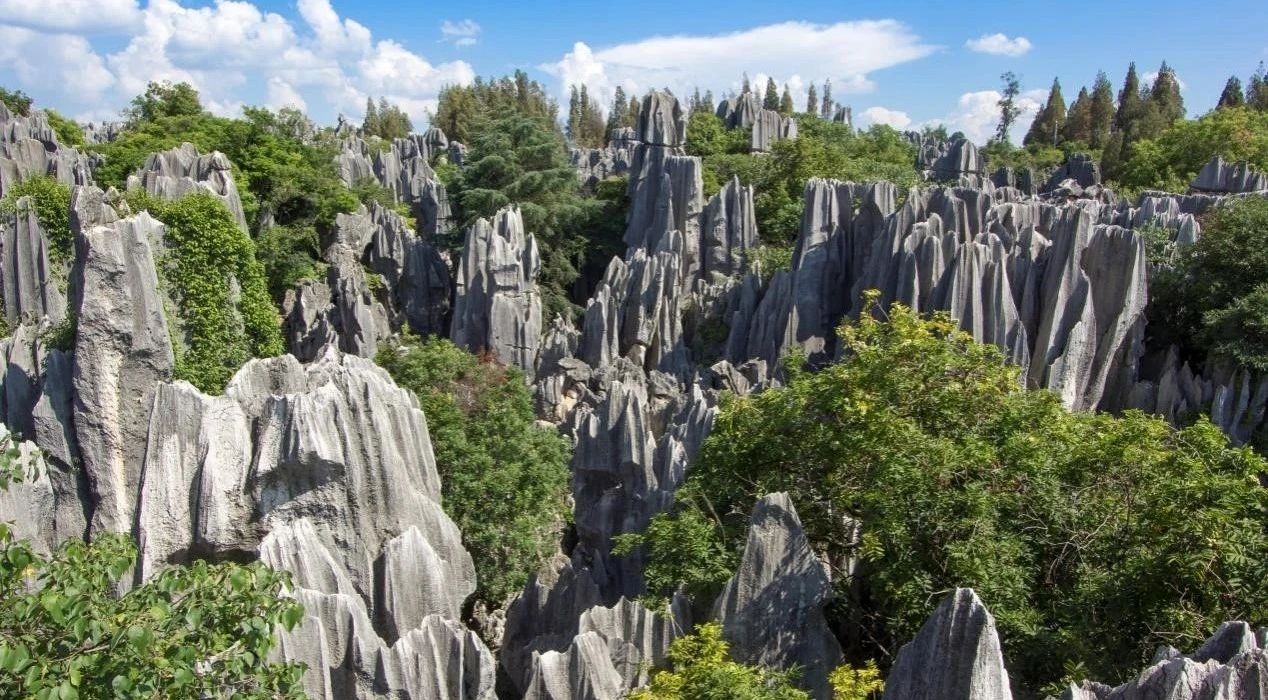
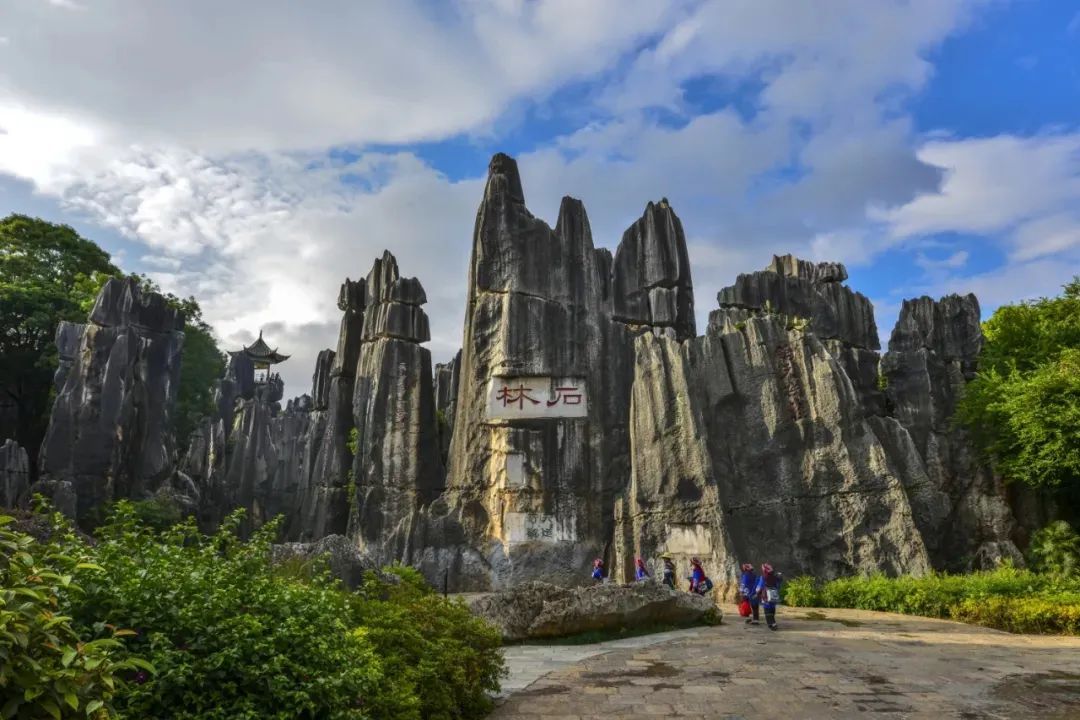
The story begins in the Devonian period, some 270 million years ago, when this corner of Yunnan lay beneath a warm shallow sea. Thick limestone settled on the seabed, tectonic forces later heaved it onto a 1,900-m plateau, and over endless epochs rain and groundwater dissolved the rock along its fissures, honing it into thousands of grey sword blades — one of the most celebrated stone-forest karst landscapes on Earth. It has been praised as the 'First Wonder under Heaven' for generations; UNESCO inscribed it in 2007 as part of the South China Karst World Heritage, and its Global Geopark status adds the science beneath the scenery.
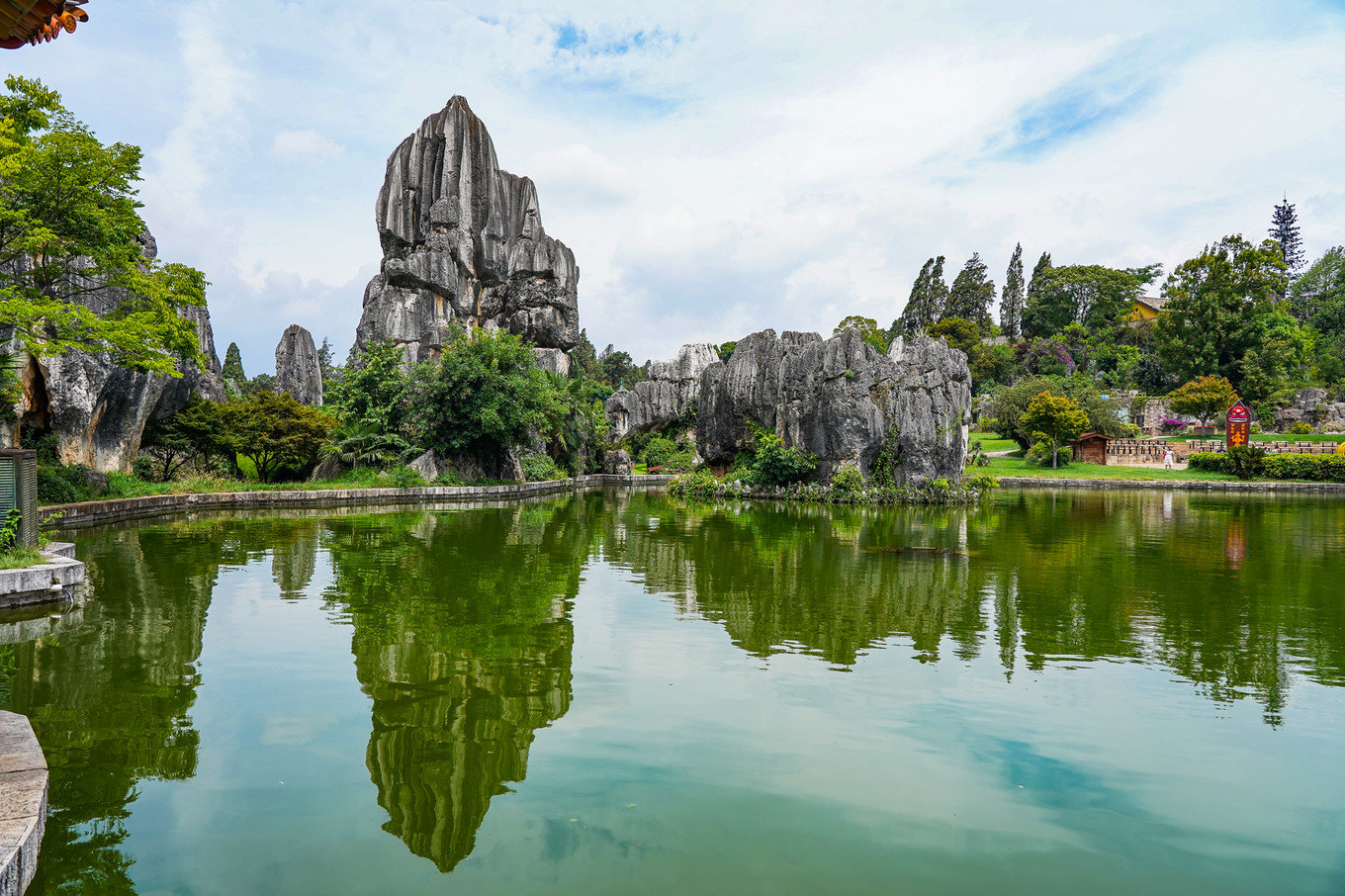
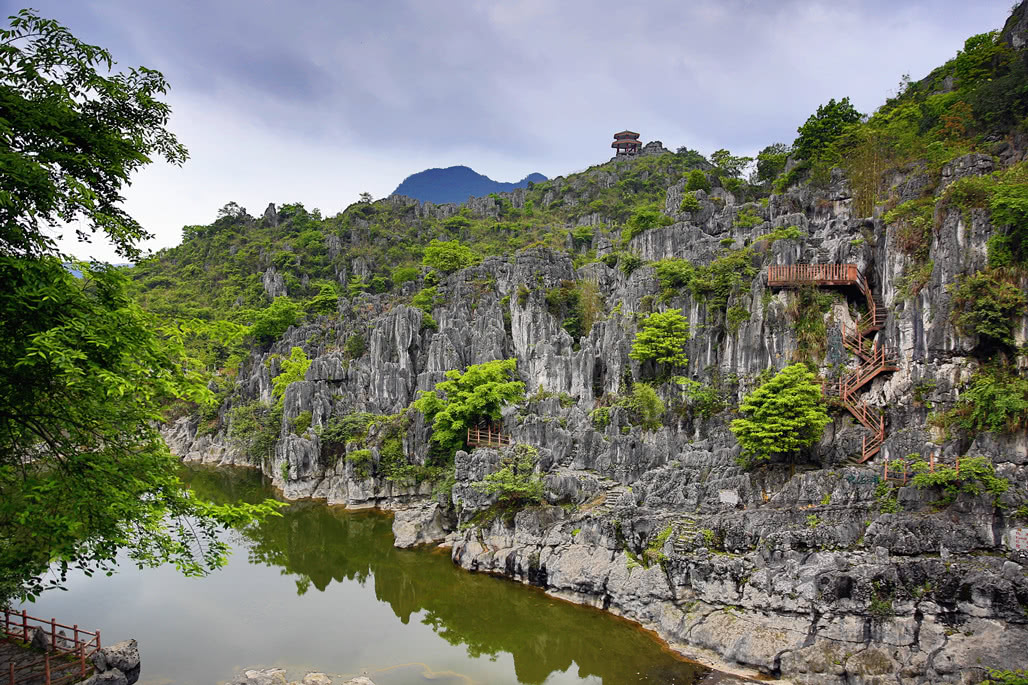
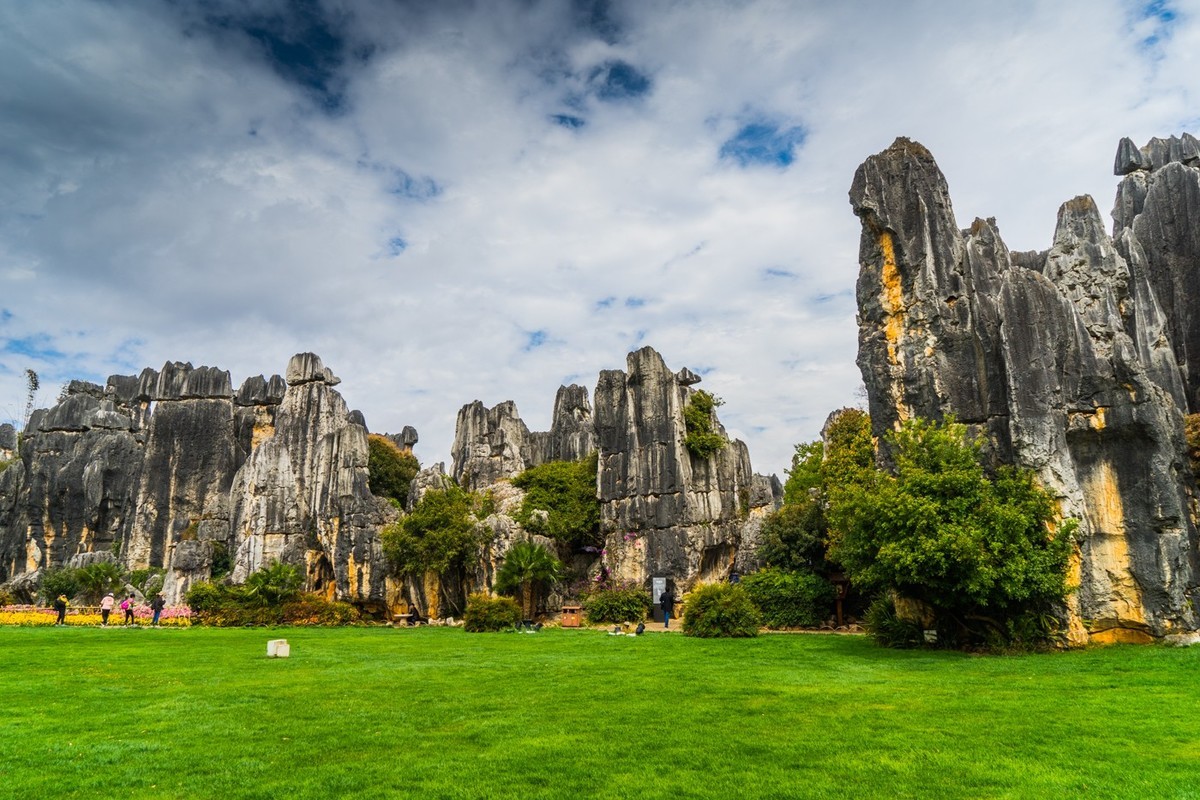
On the ground, Shilin is a labyrinth. The Greater Stone Forest crowds its densest pinnacles — the tallest over 40 m — around the mirror of Sword Peak Pond and the hilltop panorama at Wangfeng Pavilion, with stone paths threading between 20–30 m blades you can walk beneath, squeeze past and climb. The Lesser Stone Forest then exhales into lawns and scattered pinnacles where the Ashima rock stands by the water, while quieter reaches such as Bushao Hill and the Millennium Mushroom reward travelers who walk on.
The stones also carry a living culture: this is the heartland of the Sani people, a branch of the Yi, whose best-loved legend tells of Ashima, a girl who chose to turn to stone rather than give up her beloved Ahei — her silhouette still watches over the Lesser Forest. A ¥130 ticket covers all five core sections plus the Karst Geological Museum, and at 78 km from Kunming the park is an easy 20 minutes by high-speed train or about an hour by expressway.
Highlights
The Greater Stone Forest Maze
The densest blade labyrinth — Sword Peak Pond, the Wangfeng Pavilion panorama and Lotus Peak, with paths threading 20–30 m pillars.
Lesser Stone Forest & Ashima Rock
Open meadows and level paths; the silhouette of the Sani heroine standing by the water — the park's soul.
Bushao Hill & Millennium Mushroom
The quieter quarters beyond the core — hilltop views, shape-watching stones and the giant mushroom-shaped pillar, mostly crowd-free.
Karst Geological Museum
Marine fossils and karst science included in the ticket — the smart rainy-hour stop and a family favourite.
Naigu Stone Forest
The separate black-stone forest to the north — ink-dark pinnacles and, from September to November, seas of blooming cosmos.
Yi Culture & Torch Festival
Sani song and dance inside the park; on lunar June 24 the Torch Festival fills the county with fire dances and bonfires.
Photo Gallery
Comments