 CHINA 5A TRAVEL
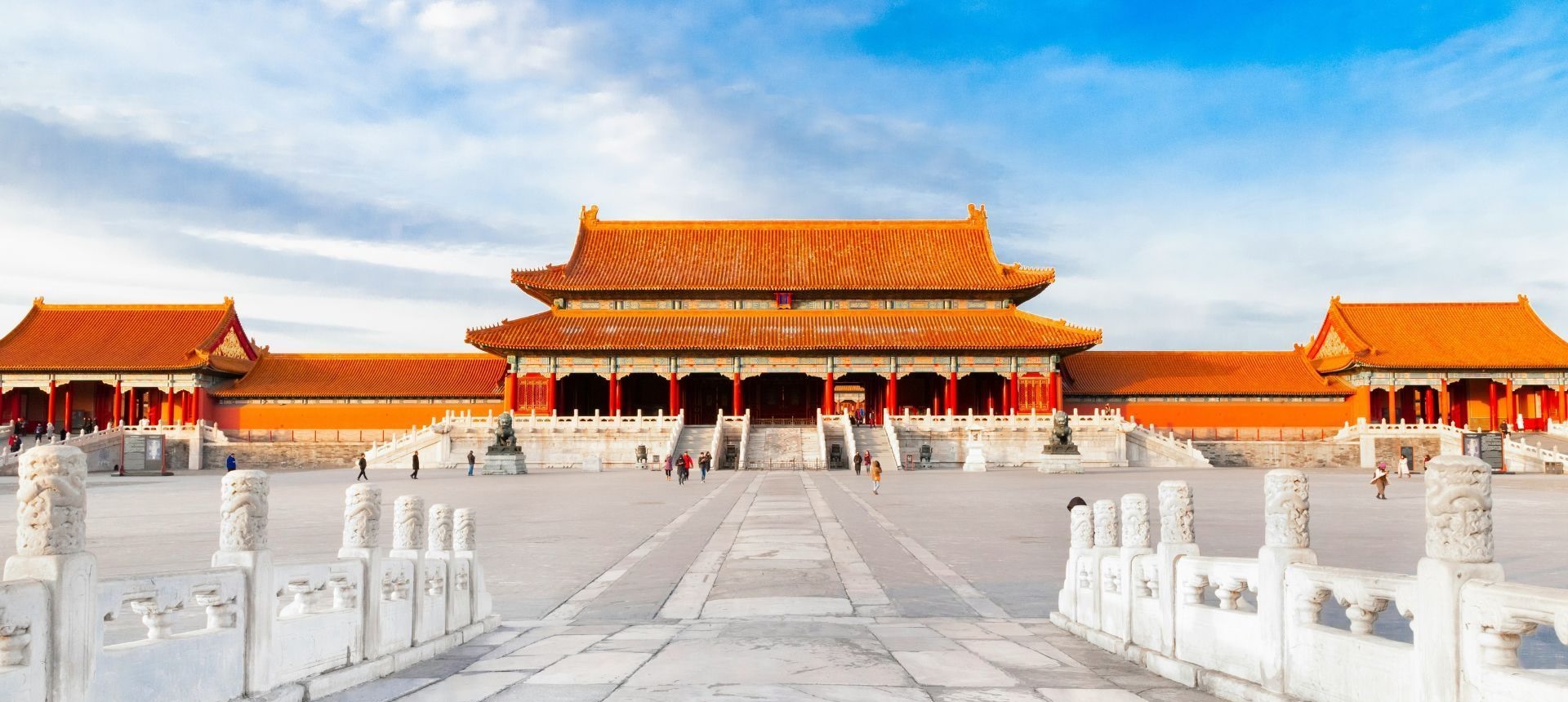
The Forbidden City — 24 emperors, 9,000 rooms and 1.9 million treasures within the world's largest and best-preserved ancient wooden palace complex.
Completed in 1420 under the Yongle Emperor, the Forbidden City (Zijincheng, the Purple Forbidden City) was the ceremonial and residential heart of imperial China for nearly five hundred years: twenty-four emperors of the Ming and Qing dynasties ruled the realm from behind its vermilion walls. Enclosing 720,000 square metres and some nine thousand rooms, it remains the largest and best-preserved ancient wooden palace complex on Earth — inscribed by UNESCO in 1987 as one of the Imperial Palaces of the Ming and Qing Dynasties, ranked among the world's five great palaces, and, with more than seventeen million visitors a year, the most-visited museum on the planet.
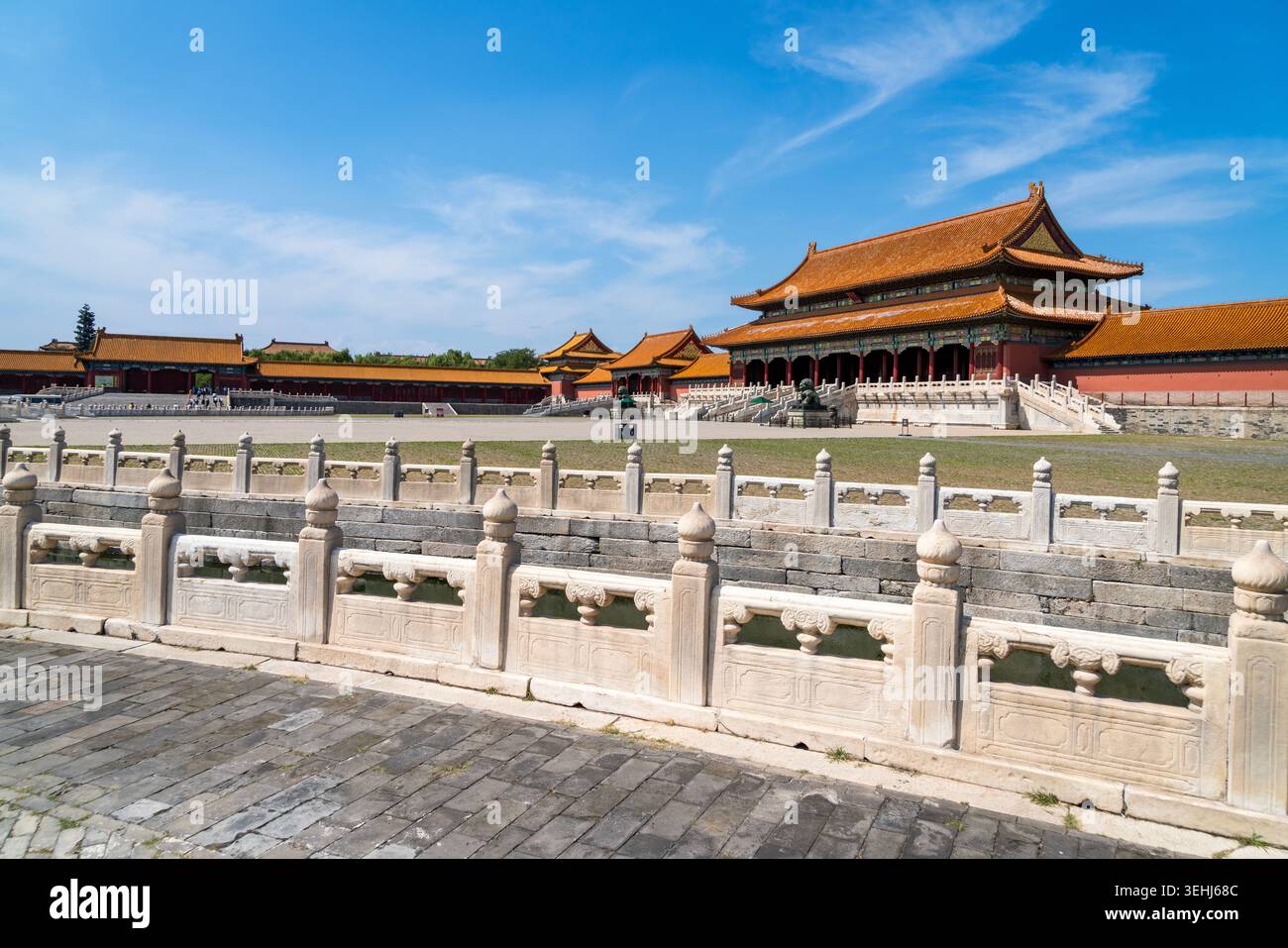
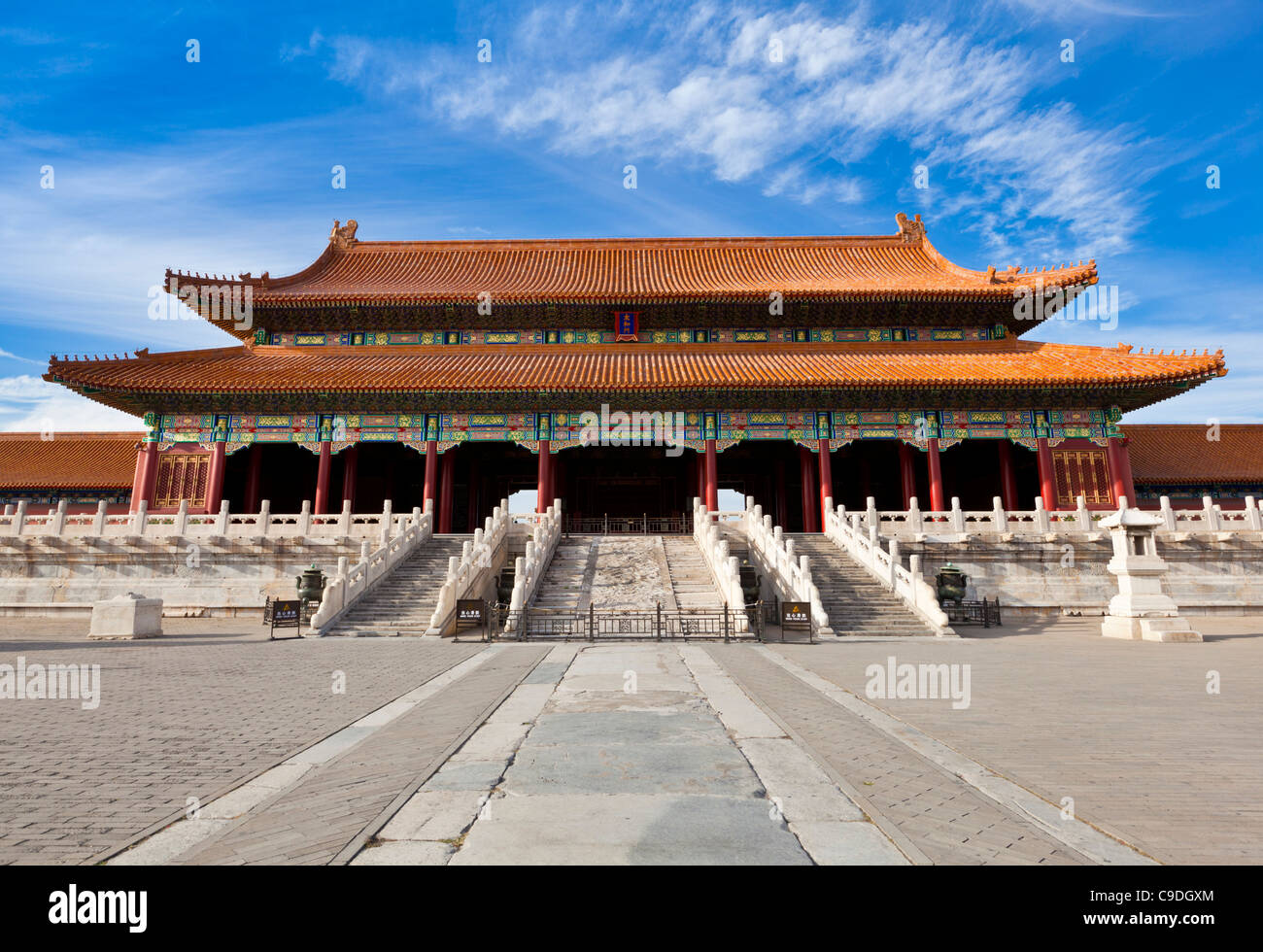
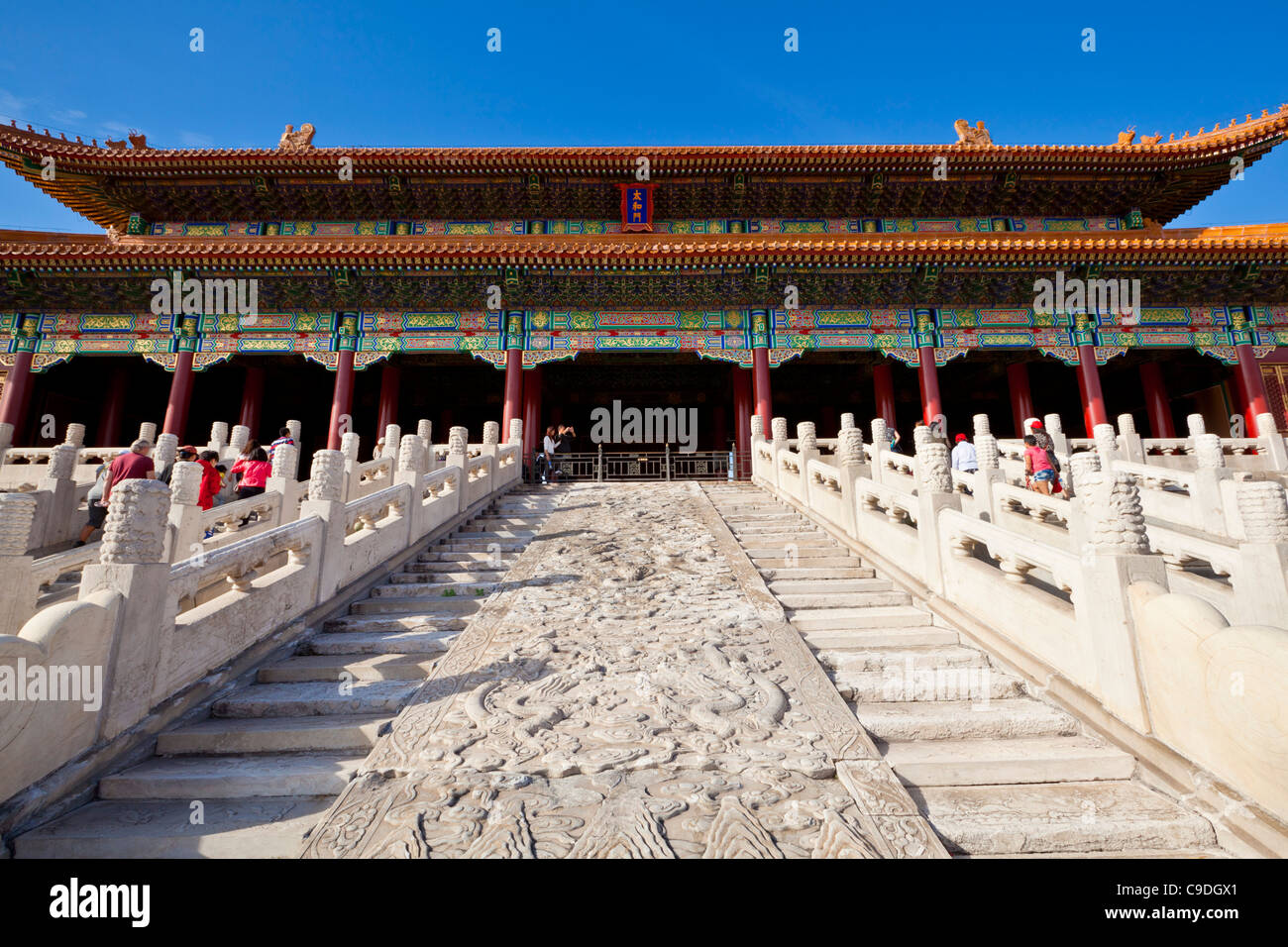
The palace unfolds along a perfectly measured central axis. Enter beneath the Meridian Gate, cross the five bridges of the Inner Golden Water, and the Outer Court opens around the three great halls — Supreme, Central and Preserving Harmony — raised on a triple marble terrace where emperors were crowned and Qing scholars sat their highest examinations. Northward lie the Inner Court's Palace of Heavenly Purity, the Hall of Union with its twenty-five imperial seals, and the Palace of Earthly Tranquility, flanked by the consorts' Six Eastern and Western Palaces before the four-hundred-year-old cypresses of the Imperial Garden close the axis. In the northeast, Qianlong built himself a retirement city-within-a-city — the Ningshou quarter, with its Nine-Dragon Wall, opera stage and the poignant Well of Concubine Zhen.
Since 1925 the palace has lived a second life as the Palace Museum, its nearly 1.9 million artifacts — Song-dynasty paintings, monumental jades, imperial timepieces and court regalia — rotating through the Treasure Gallery, the Clock Museum and the Painting Gallery's headline exhibitions. Visitors still move as the courtiers did, one-way south to north from the Meridian Gate to the Gate of Divine Prowess, where the hilltop pavilion of Jingshan Park waits to frame the whole golden sprawl. Beijing itself is arranged around the palace: the Temple of Heaven, the hutongs of Nanluoguxiang and the lakes of Shichahai all lie within a short ride.
Highlights
The Three Great Halls
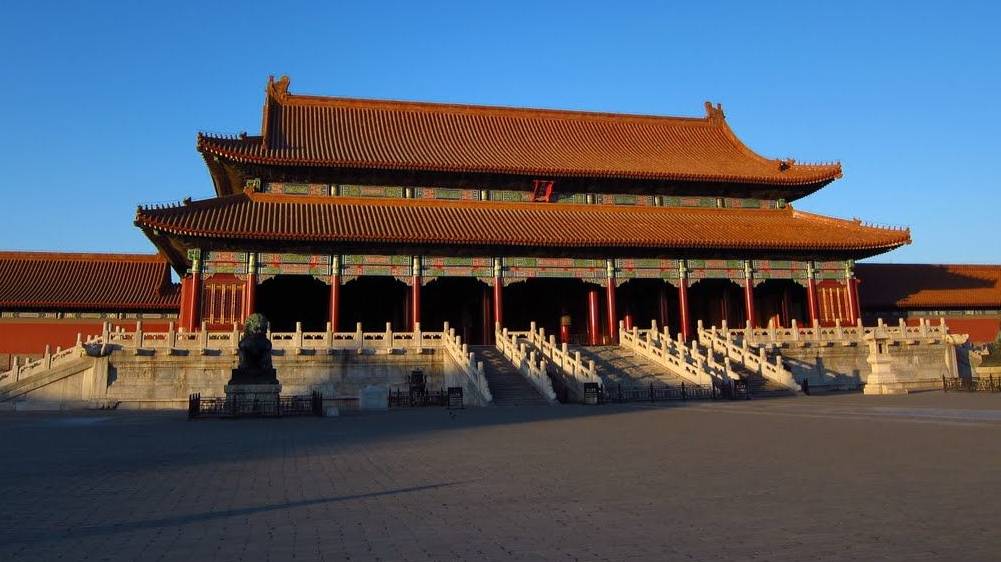
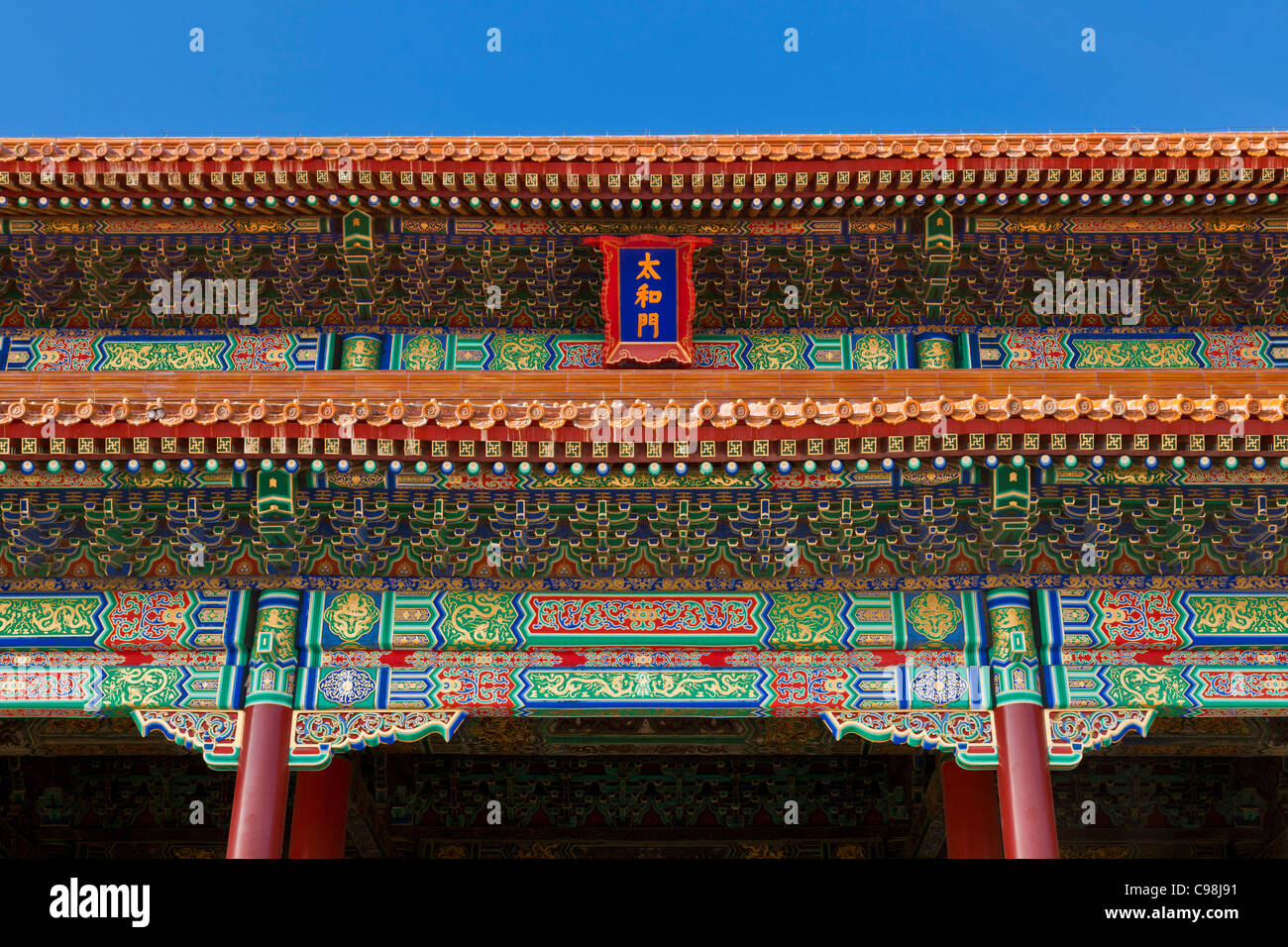
The Hall of Supreme Harmony and its two companions on a triple marble terrace — China's largest timber hall, the throne stage of coronations and grand ceremonies.
The Meridian Gate Entry
Every visit begins beneath the palace's tallest gate tower — the U-shaped gateway whose central arch once opened for the emperor alone.
The Inner Court & Imperial Garden
Palace of Heavenly Purity, the Hall of Union's 25 imperial seals and the imperial wedding chamber, ending among ancient cypresses and rockeries.
Six Western Palaces
The consorts' lanes west of the axis — the Palace of Gathered Elegance preserved as Empress Dowager Cixi kept it, red-wall corridors made for photographs.
Ningshou Retirement Quarter
Qianlong's city-within-a-city — the Nine-Dragon Wall, the soaring Changyin Pavilion opera stage, and the quietly moving Well of Concubine Zhen.
Treasure Gallery & Clock Museum
Two ¥10 add-ons worth every yuan — golden pagodas, jade mountains and court regalia, plus 18th-century musical clocks chiming in live winding demonstrations.
Photo Gallery
Comments